Burnham to fast-track sanctions on Israel
PM brings forward restrictions on West Bank settlements despite criticism from White House and Labour MPs
Ed Miliband, the Foreign Secretary, has announced plans for sanctions on Israel “in the coming weeks” in Parliament, promising a “comprehensive reset” in British-Israeli relations…Mike Huckabee, the US ambassador to Israel, accused the British Government of “Jew hate” and said “the Brits have lost it”
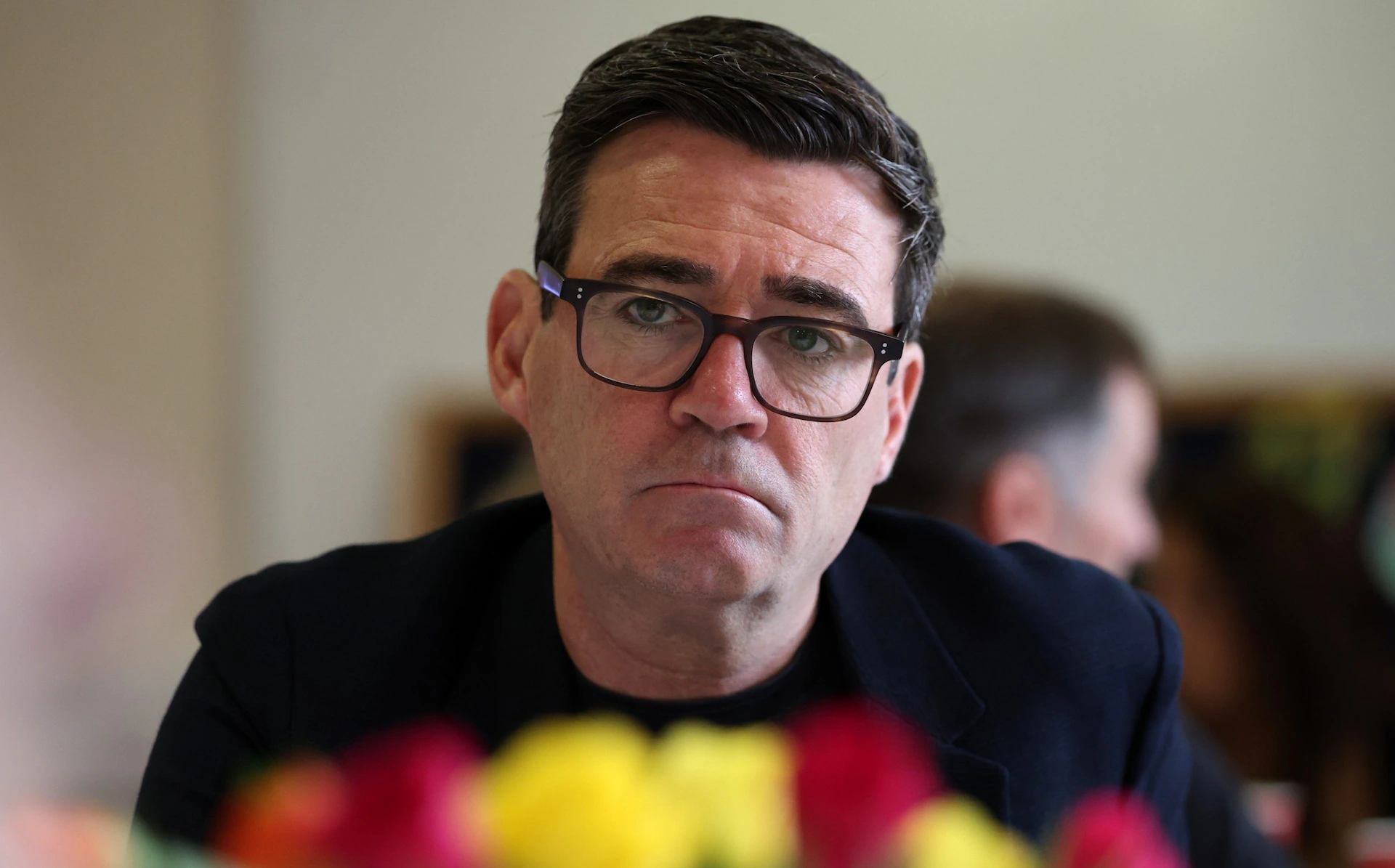
Relations between Britain and Israel have deteriorated since Andy Burnham became Prime Minister 50 days ago Credit: WPA Pool/Getty Images
Andy Burnham is to announce fast-tracked sanctions against Israel on Tuesday, The Telegraph understands.
The Government will move against Israeli settlements in the West Bank, despite criticism of Britain’s plans from the White House and Labour MPs.
The announcement comes one day after ministers set the schedule for a by-election in Sir Keir Starmer’s former seat of Holborn and St Pancras, where Labour is under threat from the Green Party.
The sanctions are not thought to include financial restrictions on specific individuals or companies, but could ban trade with companies operating in settlements in the West Bank.
Ed Miliband, the Foreign Secretary, has announced plans for sanctions on Israel “in the coming weeks” in Parliament, promising a “comprehensive reset” in British-Israeli relations.
The measures appear to have been brought forward before Israeli religious holidays, which begin on Friday, and Labour’s annual party conference at the end of the month.
Mr Burnham is expected to discuss the sanctions with his Cabinet on Tuesday morning, before they are announced in a statement by Mr Miliband.
Labour MPs and Jewish groups told The Telegraph that any sanctions on settlements could amount to a “de facto boycott” of Israeli goods.
They are also likely to anger Donald Trump, the US president, whose ambassador to Israel has accused Mr Miliband of “Jew hate” over his opposition to settler expansion.
On Monday night, Israel’s finance minister reacted to the news of sanctions by calling for the British ambassador to be expelled.
Bezalel Smotrich wrote on X: “We will not be a doormat trampled by an anti-Semitic government, in a country conquered by radical Islam, trying to save itself from economic and social decline by attacking Jews and the State of Israel.
“The British Mandate in the Land of Israel is over.”
Nigel Tobias, the executive director of the British Israel Chamber of Commerce, said: “I do not condone any illegal activity by settlers against Palestinians but sanctions on trade with Israeli companies in the West Bank are more likely to hinder, rather than help, bring about a peaceful two-state solution.
“Sanctions will further encourage and embolden anti-Semitic attacks against British Jews at a time when they’re already at record levels.”
One Labour MP said Mr Burnham had been forced into tougher action on Israel by “muppet” MPs who were concerned about losing their seats to the Green Party and were “freaked out” by email campaigns from pro-Gaza campaigners.
“The risk is that what are intended to be targeted sanctions could have quite messy knock-on implications,” they said. “It will end up with a boycott of most stuff from Israel.”
Mike Huckabee, the US ambassador to Israel, accused the British Government of “Jew hate” and said “the Brits have lost it” over the weekend, after the Foreign Secretary posted a video accusing Israel of blocking medicine deliveries to Gaza.
A Downing Street spokesman said on Monday: “We completely reject that assertion. We’re committed to protecting Jewish communities in the UK and continue to engage with community leaders and groups.”
Mr Burnham held a call with Mr Trump on Monday afternoon and stressed “the importance of a two-state solution”.
The Prime Minister told the president about the proposed ban, according to The Times. The Trump administration is expected to make a statement criticising the decision.
Earlier on Monday, No 10 said that Mr Burnham had not spoken to Benjamin Netanyahu since becoming prime minister, although he had held calls with many other foreign leaders.
Gideon Sa’ar, the Israeli foreign minister, said Mr Miliband’s “patronising” criticism of plans for the construction of a settlement in the West Bank had damaged ties between the two countries.
Mr Miliband said last week that the new sanctions would be announced in response to the Israeli government’s publication of a tender for the construction of the E1 project.
The project will link Jerusalem with Ma’ale Adumim, another existing settlement in the West Bank, all but cutting off Palestinian East Jerusalem from the rest of the West Bank.
Israeli sources told The Telegraph they believed the E1 project had been used as a pretext for further sanctions that Labour already intended to impose.
The Israeli government is also frustrated by the prospect of sanctions before the country’s upcoming parliamentary election.
The Netanyahu administration will probably retaliate with sanctions on the UK and could block Britain from participating in the Gaza peace process, as Israel previously did to the Netherlands in response to similar sanctions.
Tom Keatinge, a sanctions expert who leads the centre for finance and security at the Royal United Services Institute (Rusi), said the expected new package could deter British banks from trading with Israel at all.
“Whatever a civil servant or politician might say, there’s no such thing as a smart sanction, just like there’s no such thing as a smart bomb,” he said. “The room for interpretation is enormous.”
The difficulty for a tailored package of sanctions aimed at West Bank settlements but not Israel as a whole, is that the settlements use the same banks and financial systems as the wider country.
Banks may have to suspend trade
Hugh Lovatt, from the European Council on Foreign Relations, who is broadly in favour of the proposed new sanctions, said: “With the physical products, it’s still two economies, at least when it comes to exports.
“But with finances, there is only one financial sector. So, does it force Israel to differentiate its financial sectors? It’s the nuclear option.”
As such, British banks would find themselves in the difficult position of having to try to establish whether a transaction involves a sanctioned West Bank settler branch or account, or one based in Israel.
Mr Keatinge, who worked as an investment banker for 20 years, said this could be practically impossible in many cases and that British banks and financial institutions may be forced into suspending trade with Israel more broadly.
“As a bank you are constantly making decisions about what to do and what not to do.
“If there is a reason not to do something, then you’ll probably choose that path because it’s just not worth the time and effort trying to figure out whether getting money into a contested area is worth the hassle if there are sanctions floating around.”
Downing Street and the Foreign Office declined to comment.